Ram 2500 Diesel Ownership Guide for Kansas Drivers
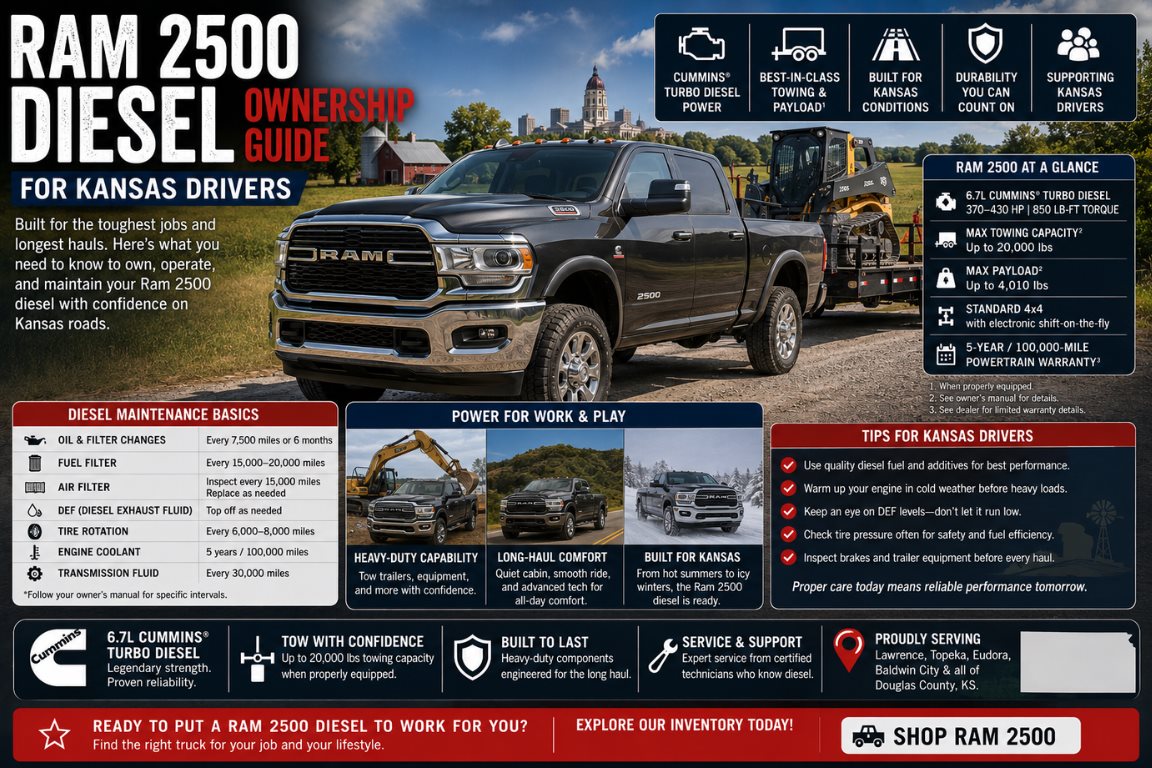
Take On Heavy Hauling and Long Highway Trips: Browse New Ram 2500 Inventory at Bob Sight CDJR in Lawrence, KS
Mastering Ram 2500 diesel ownership requires understanding 6.7-liter Cummins Turbo Diesel engine specs, Diesel Exhaust Fluid management, cold-weather gel prevention, and heavy-duty towing setup for Kansas highways. Navigating early morning hauls along Interstate 70 toward Topeka, pulling heavy livestock trailers across Douglas County farmland, or towing fifth-wheel campers down Highway 10 toward the Kansas City metro demands a heavy-duty pickup built for extreme torque and continuous durability. At Bob Sight CDJR in Lawrence, Kansas, our sales and service specialists help local truck owners, contractors, and agricultural operators maximize the performance, fuel efficiency, and long-term resale value of their Ram 2500 Cummins diesel trucks.
Operating a heavy-duty diesel pickup across changing Kansas seasons presents distinct operational demands, from bitter winter freezes that require block heaters to high-ambient summer heat during heavy towing trips along Interstate 35. Evaluating oil change intervals, dual fuel filter maintenance, Diesel Particulate Filter regeneration cycles, and transmission towing modes enables owners to protect their mechanical investment. Exploring key technical specifications, scheduled maintenance routines, and practical driving tips demonstrates why the Ram 2500 Diesel remains an unbeatable heavy-duty workhorse for Kansas drivers.
In This Guide You'll Learn
Here is what Kansas heavy-duty truck owners will discover in this comprehensive Ram 2500 Diesel guide:
- Performance specs of the legendary 6.7-liter Cummins Turbo Diesel engine, including horsepower, torque curves, and towing limits.
- Essential cold-weather operation practices for Kansas winters: engine block heater usage, anti-gel fuel additives, and glow plug warm-up cycles.
- Step-by-step procedures for managing Diesel Exhaust Fluid levels and maintaining the Diesel Particulate Filter emissions system.
- A detailed comparison table analyzing Cummins Turbo Diesel specs against the 6.4-liter HEMI V8 gasoline engine option.
- Step-by-step maintenance schedule for dual fuel filters, synthetic engine oil changes, transmission fluid service, and air filters.
- Step-by-step guidance on evaluating heavy-duty commercial financing, Section 179 business tax savings, trade-in equity, and out-the-door pricing.
- Proactive driving habits to optimize diesel fuel economy during highway towing and long-distance driving across Midwest routes.
- Answers to frequently asked questions regarding Ram 2500 Cummins longevity, tow prep packages, DEF consumption, and factory warranty coverage.
The Heart of the Truck: 6.7-Liter Cummins Turbo Diesel Performance
The available 6.7-liter Cummins Turbo Diesel inline-six engine generates 370 horsepower and a massive 850 lb-ft of torque, providing high-torque pulling power for heavy commercial and recreational loads. Engineered with a high-strength compacted graphite iron block and a forged steel crankshaft, the Cummins diesel engine is built for commercial durability, lower operating revolutions per minute, and a long mechanical service life.
Unlike gasoline engines that require high RPMs to reach peak power, the 6.7-liter Cummins diesel delivers its full 850 lb-ft of torque at just 1,700 RPM. This low-RPM torque curve allows the Ram 2500 to pull heavy gooseneck livestock trailers, construction equipment, and large fifth-wheel RVs up steep highway inclines without straining the engine. When paired with the heavy-duty 68RFE 6-speed automatic transmission, the Ram 2500 Diesel boasts a maximum towing capacity of up to 19,990 pounds and a maximum payload rating of up to 3,150 pounds when properly equipped.
Another key advantage for Kansas drivers is the standard smart diesel exhaust brake. At the push of a dashboard button, the variable-geometry turbocharger restricts exhaust flow to generate engine braking force, slowing the truck and trailer smoothly on downhill highway descents near the Flint Hills. This feature reduces brake pad wear, prevents brake fade, and enhances overall control when hauling heavy loads down Interstate 70.
Winter Operation in Kansas: Block Heaters, Fuel Gelling, and Cold Starts
Operating a diesel truck during cold Kansas winter months requires proactive fuel treatment, proper glow plug pre-heating, and using the factory engine block heater during sub-zero freezes. Diesel fuel contains naturally occurring paraffin wax, which can crystallize and gel in fuel lines and filters when ambient temperatures drop below freezing, starving the engine of fuel.
To ensure reliable winter starting and protect your Cummins engine during Kansas cold snaps, follow these essential cold-weather driving practices:
- Utilize Anti-Gel Diesel Fuel Additives: When winter temperatures drop below 20 degrees Fahrenheit, treat your fuel tank with a high-quality anti-gel additive during fill-ups at local stations along Iowa Street or 23rd Street. This lowers the fuel cold-filter plugging point and prevents wax crystals from clogging your dual fuel filters.
- Plug in the Factory Engine Block Heater: The Ram 2500 Diesel includes an engine block heater that warms engine coolant and oil overnight. Plug in the block heater when ambient temperatures are forecasted to drop below 10 degrees Fahrenheit to reduce starter motor strain, speed up interior heater warm-up times, and protect cylinder walls during cold starts.
- Wait for the "Wait to Start" Indicator Light: When turning the ignition on cold mornings, always allow the grid heater "Wait to Start" light on the digital instrument cluster to extinguish before cranking the engine. This allows the air intake heater to warm combustion chamber air for smooth ignition.
- Avoid Excessive Cold Idling: Limit idle warm-up times to 5 or 10 minutes. Prolonged idling in extreme cold prevents the engine from reaching optimal operating temperature, leading to wet stacking, unburned fuel deposits on valves, and accelerated DPF soot accumulation.
Understanding Diesel Exhaust Fluid (DEF) and Emissions System Maintenance
Managing Diesel Exhaust Fluid levels and allowing automatic Diesel Particulate Filter regeneration cycles to complete keeps your Ram 2500 operating at peak efficiency while meeting clean air standards. Modern diesel trucks utilize selective catalytic reduction technology to reduce nitrogen oxide emissions into harmless nitrogen gas and water vapor.
The Ram 2500 features a dedicated 5.7-gallon DEF tank with an easy-to-read gauge on the digital instrument cluster. Under normal driving conditions, DEF consumption averages roughly 1 gallon per 500 to 1,000 miles, depending on payload weight and towing frequency. Towing heavy trailers along Highway 10 or Interstate 35 increases engine workload, which naturally increases DEF consumption. Always refill your DEF tank with fresh, high-grade fluid before long towing trips, and avoid storing DEF jugs in direct summer sunlight, as high heat degrades fluid quality.
The Diesel Particulate Filter traps exhaust soot during daily driving. When soot reaches capacity, the vehicle automatically initiates a "passive" or "active" regeneration cycle, elevating exhaust temperatures to burn off accumulated soot into fine ash. Driving at steady highway speeds along K-10 or I-70 for 20 to 30 minutes allows regeneration cycles to finish completely, preventing soot buildup and keeping your emissions system operating cleanly.
Ram 2500 Powertrain Comparison: Cummins Diesel vs 6.4L HEMI V8 Gas
Comparing engine specifications, torque curves, maximum towing capacities, and recommended fuel types helps buyers select the right powertrain for their workload and budget. While the 6.4-liter HEMI V8 gas engine offers lower initial purchase costs and higher payload capacities, the 6.7-liter Cummins Turbo Diesel provides superior long-haul towing power, lower highway engine RPMs, and higher resale value.
The comparison table below outlines key specs across Ram 2500 engine choices:
| Engine Specification / Feature | 6.7L Cummins Turbo Diesel I6 | 6.4L HEMI V8 Heavy-Duty Gas |
|---|---|---|
| Horsepower / Torque | 370 HP @ 2,800 RPM / 850 lb-ft @ 1,700 RPM | 410 HP @ 5,600 RPM / 429 lb-ft @ 4,000 RPM |
| Transmission | 68RFE 6-Speed Automatic | 8HP75 8-Speed Automatic |
| Maximum Towing Capacity | Up to 19,990 lbs | Up to 17,730 lbs |
| Maximum Payload Capacity | Up to 3,150 lbs | Up to 4,010 lbs |
| Exhaust Braking | Standard Smart Diesel Exhaust Brake | Standard Powertrain Downshifting |
Step-by-Step Guide: Essential Service Intervals for Ram 2500 Cummins Owners
Following factory-scheduled service intervals using genuine Mopar filters and synthetic lubricants ensures engine reliability, protects fuel injectors, and preserves warranty coverage. High-pressure common-rail fuel injection systems operate at extreme pressures, making clean fuel and fresh oil vital for long-term engine performance.
Follow these five step-by-step service procedures to maintain your Ram 2500 Cummins Diesel:
- Change Synthetic Engine Oil and Oil Filter Every 7,500 to 10,000 Miles: Replace engine oil using recommended 15W-40 (or 5W-40 full synthetic for cold Kansas winters) oil and a genuine Mopar oil filter. Never exceed 15,000 miles or 500 engine hours between oil services.
- Replace Dual Fuel Filters Every 15,000 Miles: The Ram 2500 features two fuel filters: an under-hood filter and a chassis-mounted fuel-water separator. Replace both filters simultaneously every 15,000 miles (or at every second oil change) to protect high-pressure fuel injectors from abrasive contaminants and moisture.
- Drain Water from the Fuel-Water Separator Periodically: If the "Water in Fuel" indicator light illuminates on your instrument cluster, turn off the engine and open the drain valve on the chassis-mounted filter bowl into a container to purge trapped water before driving.
- Inspect and Replace the Engine Air Filter Every 15,000 to 30,000 Miles: Inspect the air filter element regularly, especially after driving on dusty agricultural roads or construction sites across Douglas County. A clean air filter ensures optimal airflow to the turbocharger.
- Service Automatic Transmission and Differential Fluids Every 60,000 Miles: Replace transmission fluid, transmission filters, and front/rear differential gear lubricants every 60,000 miles (or 30,000 miles under severe commercial towing use) to prevent fluid thermal breakdown.
Step-by-Step Guide: Evaluating Financing, Section 179 Savings, and Out-The-Door Price
Structuring your heavy-duty truck purchase involves evaluating trade-in allowances, business line-of-credit options, Section 179 business tax deductions, and itemized out-the-door price estimates. Establishing a clear budget before finalizing your deal ensures your truck purchase aligns with your commercial fleet or household goals.
Follow these five financial evaluation steps when purchasing a Ram 2500 Diesel at Bob Sight CDJR:
- Value Your Current Vehicle Trade Allowance: Plain-language definition: Trade-in value represents the net monetary credit offered for your pre-owned vehicle, applying directly as a down payment toward your next purchase to lower overall loan principal balance.
- Request an Itemized Out-The-Door Price Estimate: Plain-language definition: Out-the-door pricing represents the complete final purchase cost including agreed vehicle price, state sales taxes, local Douglas County title fees, and dealership documentation charges with zero hidden fees.
- Calculate Section 179 Business Tax Deductions: Consult your tax professional regarding Section 179 tax guidelines, which allow qualifying business owners to deduct up to 100 percent of the purchase price of eligible heavy-duty trucks (GVWR over 6,000 lbs) during the tax year placed in service.
- Explore Commercial Financing Lines and Loan Term Rates: Work with our dedicated finance department to compare commercial auto loan interest rates through Chrysler Capital or local Kansas credit unions to secure flexible monthly payment schedules.
- Factor in Annual Operating Expenses and Insurance: Obtain an auto insurance quote for your target Ram 2500 trim and factor in routine fuel, DEF, synthetic oil changes, and tire upkeep to establish your total monthly vehicle budget.
Quick Facts: Ram 2500 Diesel Highlights
- 850 lb-ft of Torque: The 6.7L Cummins Turbo Diesel generates peak torque at just 1,700 RPM for heavy pulling power.
- Smart Diesel Exhaust Brake: Standard engine braking technology reduces brake pad wear and maintains chassis control during steep highway descents.
- Dual Fuel Filter Protection: Features under-hood and chassis-mounted fuel filters with water-in-fuel sensor technology to protect fuel injectors.
- 19,990-Lb Towing Limit: Maximize heavy trailering capability with available gooseneck and fifth-wheel prep packages.
- Link Coil Rear Suspension: Class-exclusive five-link coil rear suspension delivers smooth highway ride comfort and confident load support.
Ownership Planning: Long-Term Dependability and Resale Value in Kansas
Maintaining long-term mechanical dependability and strong resale value on a Ram 2500 Diesel requires following scheduled maintenance, protecting body sheet metal, and keeping complete service records. Cummins-powered trucks historically hold exceptional resale value in Northeast Kansas due to high demand among contractors, farmers, and outdoor enthusiasts.
Protecting the truck chassis from seasonal road salt and agricultural mud is essential. Thoroughly washing the undercarriage after winter highway driving along I-70 or K-10 removes corrosive salt brine and mud deposits from frame rails, brake lines, and exhaust components. Installing a factory spray-in bedliner protects the bed floor from scratches and rust when loading heavy equipment or trailer hitch gear.
Utilizing authentic Mopar OEM filters, factory-approved synthetic lubricants, and certified service technicians preserves complete vehicle compatibility and keeps your factory warranty protected. Our certified service facility at Bob Sight CDJR features heavy-duty vehicle lifts, specialized diesel diagnostic machinery, and factory-trained technicians to keep your Ram 2500 job-ready.
Frequently Asked Questions About Ram 2500 Diesel Ownership in Kansas
How often should I change the fuel filters on my Ram 2500 Cummins Diesel?
You should replace both fuel filters on your Ram 2500 Cummins Diesel every 15,000 miles or at every second oil change, whichever comes first. The Ram 2500 features a dual fuel filtration system consisting of an under-hood filter and a chassis-mounted fuel-water separator. Changing both filters regularly prevents abrasive contaminants and moisture from reaching the high-pressure common-rail fuel injection system, protecting expensive fuel injectors from premature wear.
Pro-Tip from the Bob Sight CDJR Service Bay: Always use genuine Mopar fuel filters to ensure correct filtration micron ratings and water separation efficiency. Drain accumulated water from the fuel-water separator bowl periodically using the drain valve.
Do I need to plug in my Ram 2500 Diesel during Kansas winters?
Yes, plugging in the factory engine block heater is highly recommended when ambient temperatures fall below 10 degrees Fahrenheit in Kansas. The block heater warms engine coolant and oil overnight, which reduces starter motor strain, allows easier cold starts, speeds up cabin heater warm-up, and protects internal engine bearings during cold starts.
Pro-Tip from the Bob Sight CDJR Service Bay: Connect your block heater cord to an outdoor heavy-duty grounded timer set to turn on 2 to 3 hours before your planned morning departure to save electricity while ensuring a warm engine start.
What is the difference in fuel economy between a Ram 2500 Diesel and a Gas truck?
While the EPA does not publish official fuel economy ratings for heavy-duty trucks, Ram 2500 Cummins Diesel owners typically report 15 to 19 MPG on the highway unloaded, compared to 12 to 15 MPG for 6.4L HEMI gas models. When towing heavy loads, the diesel engine maintains a distinct fuel efficiency advantage, as its low-RPM torque requires less fuel under heavy engine loads compared to high-revving gas engines.
Pro-Tip from the Bob Sight CDJR Service Bay: Drive at steady highway speeds between 60 and 68 MPH and maintain proper tire pressures listed on your door placard to maximize fuel efficiency when towing along I-70 or Highway 10.
Can I install a gooseneck or fifth-wheel hitch in a Ram 2500 Diesel?
Yes, you can install a gooseneck or fifth-wheel hitch in a Ram 2500 Diesel, especially when equipped with the factory 5th Wheel / Gooseneck Towing Prep Group. This factory package adds structural underbed crossmembers, fifth-wheel mounting pucks integrated directly into the bed floor, a 2-5/16-inch gooseneck ball, and an integrated 7-pin electrical connector inside the bed wall for clean, easy trailer connection.
Pro-Tip from the Bob Sight CDJR Service Bay: Verify that your total trailer pin weight or tongue weight does not exceed the specific payload rating listed on your truck tire and loading information door placard.
What factory warranty coverage comes with a new Ram 2500 Cummins Diesel?
Every new Ram 2500 Cummins Diesel includes a 3-year/36,000-mile Basic Limited Warranty and a 5-year/100,000-mile Powertrain Limited Warranty with 24/7 Roadside Assistance. The 5-year/100,000-mile diesel powertrain warranty covers core engine components, the turbocharger, fuel injection system, transmission, driveshafts, and heavy-duty axles.
Pro-Tip from the Bob Sight CDJR Service Bay: Keep documented records of all routine maintenance visits, including synthetic oil changes, fuel filter replacements, and transmission services. Maintaining complete service records preserves factory warranty protection and maximizes resale value.
Why Buying Local at Bob Sight CDJR Matters for Kansas Heavy-Duty Truck Owners
Purchasing and servicing your heavy-duty truck at Bob Sight CDJR in Lawrence guarantees dedicated commercial support, transparent pricing, and long-term service care from a trusted local auto group. Conveniently located at 2300 W 29th Terrace in Lawrence, KS, our specialists understand local trade demands, agricultural towing needs, and Midwest weather conditions, helping you choose a heavy-duty truck that fits your operational requirements.
Our commitment to local truck owners extends long past initial delivery. The Bob Sight CDJR service center features heavy-duty vehicle lifts, state-of-the-art diesel diagnostic equipment, and factory-certified technicians using genuine Mopar OEM parts. Whether your truck requires routine synthetic oil changes, dual fuel filter replacements, brake service, or complex 4x4 drivetrain maintenance, our Express Lane service bays keep your truck running reliably with minimal downtime.
We invite contractors, farmers, commercial fleet managers, and active families across Douglas County, Topeka, Eudora, Baldwin City, and the Kansas City metro area to visit Bob Sight CDJR today. Explore our expansive new and pre-owned Ram 2500 inventory, test-drive Cummins diesel models, evaluate commercial financing and tax savings, and discover why generations of Kansas drivers trust Bob Sight CDJR for all their automotive needs.
Helpful Links
- Browse New Ram 2500 Inventory in Lawrence, KS
- Explore All New Ram Truck Inventory at Bob Sight CDJR
- Value Your Trade-In Vehicle Online at Bob Sight CDJR
- Schedule Certified Ram Diesel Service in Lawrence, KS
- Apply for Commercial Truck Financing at Bob Sight CDJR
Proud to be Part of the Bob Sight Auto Group
Bob Sight CDJR is proud to be part of the Bob Sight Auto Group, a family-owned network of automotive dealerships serving communities across Kansas and Missouri for generations. Built on a foundation of integrity, transparent pricing, exceptional vehicle selection, and dedicated customer service, our auto group takes pride in supporting local drivers throughout the region. Learn more about our full dealership network below: