Ram 1500 vs Ram 2500 Lawrence KS: Which Truck Handles Kansas Towing Needs Better?
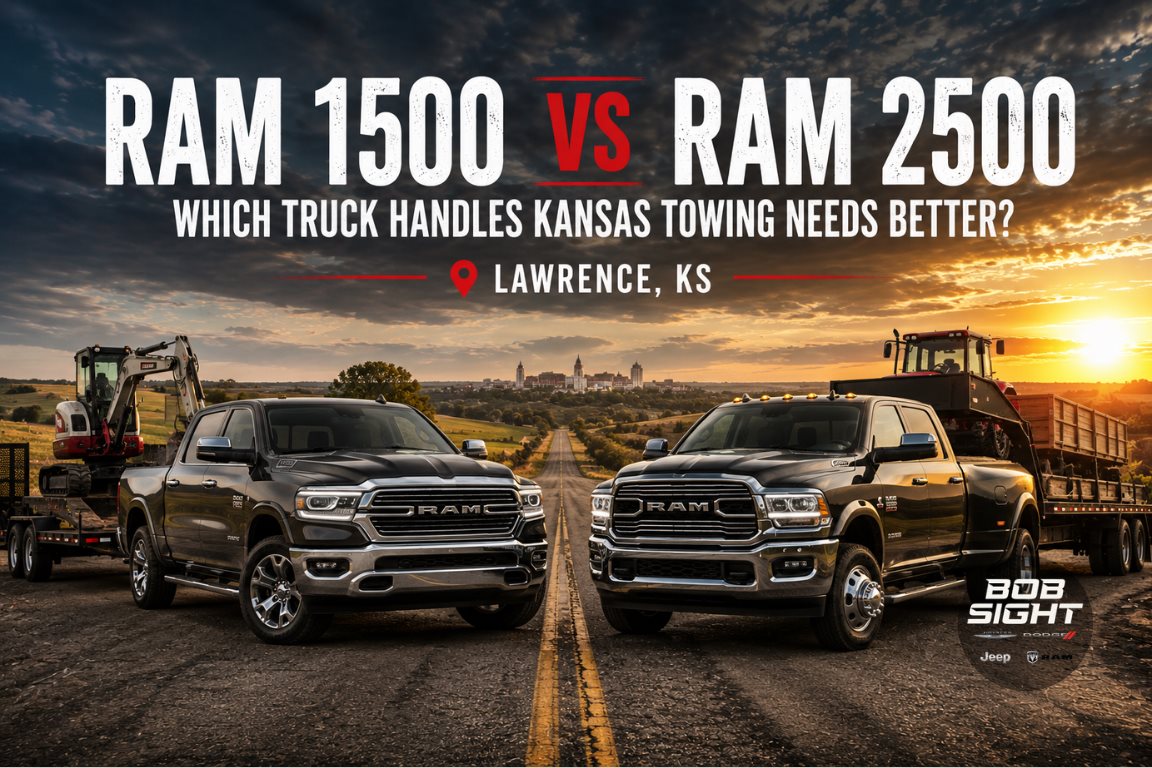
Kansas truck shoppers comparing the Ram 1500 and Ram 2500 often want to know which pickup handles towing, hauling, work responsibilities, and long-distance driving more confidently across Lawrence, Topeka, Baldwin City, Eudora, and the greater Kansas City Metro. Whether you tow campers to Clinton Lake, haul trailers between construction sites, or need dependable capability for daily work and weekend recreation, choosing the right Ram truck matters for long-term ownership satisfaction. Both trucks deliver strong capability, advanced towing technology, and impressive durability, but they serve different towing and workload needs for Kansas drivers.
At Bob Sight CDJR in Lawrence, Kansas, many truck shoppers compare the Ram 1500 and Ram 2500 because both models provide impressive capability while supporting different lifestyles and industries. The Ram 1500 balances towing confidence with smoother daily drivability, while the Ram 2500 focuses on heavy-duty strength for larger trailers, heavier payloads, and demanding work environments.
If you are researching Ram 1500 vs Ram 2500 comparisons near Lawrence KS, this guide explains towing capability, payload differences, ride quality, ownership planning, maintenance considerations, and which truck fits specific Kansas driving situations best.
Browse Ram truck inventory at Bob Sight CDJR in Lawrence, KS
In This Guide You’ll Learn
This Ram truck comparison guide helps Kansas drivers understand which pickup best supports towing, work, and long-term truck ownership.
- How the Ram 1500 and Ram 2500 differ for towing in Kansas
- Which truck fits construction crews and heavy-duty workloads better
- How ride comfort and daily drivability compare
- What payload capacity means for Kansas truck owners
- How diesel and gas powertrains affect towing performance
- What Kansas weather means for truck ownership and maintenance
- How to decide which Ram truck fits your long-term needs
Why Kansas Drivers Compare the Ram 1500 and Ram 2500
The Ram 1500 and Ram 2500 both offer strong towing and hauling capability, but Kansas drivers compare them because each truck supports very different workload expectations and ownership priorities. Drivers across Lawrence and surrounding communities often need trucks capable of handling trailers, equipment, outdoor recreation gear, and demanding road conditions throughout the year.
The Ram 1500 appeals to drivers seeking a balance between towing capability and comfortable daily driving. Many commuters traveling between Lawrence and Kansas City appreciate the smoother ride quality and easier maneuverability offered by the half-ton Ram 1500. It works well for towing boats, smaller campers, utility trailers, and recreational equipment while still remaining comfortable for family transportation and city driving.
The Ram 2500 targets drivers with heavier towing demands and more demanding workloads. Contractors hauling construction equipment, ranchers towing livestock trailers, and drivers transporting larger campers across Kansas highways often prefer the added strength of the Ram 2500. Its reinforced frame, stronger suspension, and heavy-duty engineering support larger payloads and more demanding towing responsibilities.
Kansas weather and road conditions also influence this comparison. Strong crosswinds across I-70, rough gravel roads near rural Douglas County, and changing seasonal conditions all place additional demands on trucks. Many buyers compare how these trucks perform not only under towing pressure but also during daily commuting, winter driving, and long-distance travel throughout the region.
Towing Capability Differences Between the Ram 1500 and Ram 2500
The biggest difference between the Ram 1500 and Ram 2500 involves towing confidence and how consistently each truck handles heavier trailers under demanding Kansas conditions. Both trucks tow effectively, but they are designed for different levels of workload intensity.
The Ram 1500 works extremely well for moderate towing situations common among Kansas drivers. Families towing boats to nearby lakes, utility trailers for home improvement projects, or smaller campers for weekend travel often find the Ram 1500 more than capable. It combines strong towing performance with smoother ride quality and easier urban drivability around Lawrence.
The Ram 2500 steps into a different category of capability. Drivers hauling larger enclosed trailers, construction equipment, livestock trailers, or fifth-wheel campers often benefit from the truck’s heavy-duty engineering. Kansas contractors traveling long distances with loaded trailers frequently appreciate the additional stability and control the Ram 2500 provides.
Wind exposure across Kansas highways also matters during towing. Open stretches near Topeka and western Kansas can create challenging towing conditions, particularly for taller trailers. The Ram 2500’s heavier-duty suspension and reinforced frame often help improve towing stability during these conditions.
Trailer brake controllers, towing cameras, integrated towing technology, and advanced safety systems also support towing confidence in both trucks. Drivers should think carefully about how often they tow and how heavy those loads actually are before choosing between these two Ram models.
How Payload Capacity Impacts Work Truck Performance
Payload capacity determines how much weight a truck can safely carry in the bed and cabin, making it one of the most important considerations for Kansas work crews and contractors. Many truck shoppers focus heavily on towing numbers while overlooking payload needs that affect daily usability.
The Ram 1500 handles lighter payload tasks effectively for many Kansas drivers. Landscapers, electricians, and homeowners hauling moderate equipment loads often find the Ram 1500 offers enough capability while maintaining comfortable ride quality. The truck’s balance of utility and drivability makes it attractive for drivers using the truck both professionally and personally.
The Ram 2500 supports significantly heavier payload demands. Construction crews transporting generators, compressors, building materials, and heavy equipment across Lawrence job sites often prioritize the heavier-duty suspension and reinforced components of the Ram 2500. Drivers operating in muddy construction environments or uneven rural terrain frequently appreciate the truck’s stronger work-focused engineering.
Payload planning becomes particularly important for Kansas businesses because trucks often carry more than expected over time. A contractor may initially haul only tools and ladders but later add larger trailers, heavier machinery, or expanded crew responsibilities. Planning for future workload growth helps many buyers avoid upgrading trucks too quickly.
Drivers should also consider how payload affects ride quality and braking performance. Overloaded trucks may experience suspension stress, reduced handling confidence, and increased wear on tires and braking systems. Matching truck capability to real-world workload demands helps improve safety and long-term reliability.
Daily Driving Comfort Around Lawrence and Kansas City
The Ram 1500 generally delivers a smoother and more refined daily driving experience, while the Ram 2500 prioritizes capability and durability over lighter-duty ride comfort. Kansas drivers balancing commuting and towing responsibilities often compare how these trucks perform during everyday driving.
The Ram 1500 feels more maneuverable around downtown Lawrence, shopping areas near Iowa Street, and tighter parking environments throughout the Kansas City Metro. Drivers commuting regularly between Lawrence and Overland Park often appreciate the smoother suspension tuning and more comfortable ride quality during highway travel.
The Ram 2500 feels larger and more substantial on the road because of its heavy-duty suspension setup. Drivers towing frequently may appreciate how stable and controlled the truck feels even during challenging towing conditions. However, drivers using the truck mainly for commuting may notice a firmer ride during unloaded driving situations.
Interior comfort remains strong in both models. Modern Ram trucks offer advanced infotainment systems, smartphone connectivity, premium seating materials, and driver-assistance technology designed to improve convenience during long workdays or highway travel. Kansas drivers spending long hours behind the wheel often prioritize seat comfort and interior storage flexibility.
Fuel economy expectations also influence this comparison. Drivers commuting daily between Lawrence and Kansas City may prioritize efficiency differently than contractors towing heavy trailers every day. Understanding how the truck will actually be used most often helps buyers choose the right balance between comfort and heavy-duty strength.
Step-by-Step: How to Choose the Right Ram Truck for Towing
Choosing between the Ram 1500 and Ram 2500 becomes easier when Kansas drivers evaluate their actual towing habits, work demands, and long-term ownership goals carefully. Many buyers initially choose larger trucks than necessary, while others underestimate future towing and payload needs.
Here is a practical process truck shoppers can use when comparing these two Ram models:
- Identify your trailer type and weight. Understand exactly what equipment, camper, or trailer the truck will tow most often.
- Consider daily driving needs. Drivers commuting frequently through Lawrence or Kansas City may prefer the Ram 1500’s smoother ride.
- Evaluate future workload growth. Businesses planning expansion may benefit from additional heavy-duty capability.
- Think about terrain and weather. Muddy job sites, gravel roads, and Kansas winter conditions all affect truck performance.
- Compare ownership priorities. Towing frequency, maintenance planning, and long-term comfort all influence the best choice.
Drivers should also think about passenger needs. Many Kansas families use trucks for recreation and travel in addition to work responsibilities. Rear-seat comfort, storage flexibility, and ride quality may matter just as much as towing capability depending on lifestyle priorities.
Scheduling test drives for both trucks helps reveal important differences. Real-world driving around Lawrence roads and highways often clarifies whether a driver truly needs heavy-duty capability or would benefit more from the lighter-duty balance of the Ram 1500.
Diesel vs Gas Powertrains for Kansas Towing
Both gas and diesel engines offer advantages for Kansas towing situations, but the best powertrain depends on trailer size, driving distance, and long-term workload expectations. Ram trucks provide multiple engine options that support different towing lifestyles.
Gas engines work well for lighter towing and mixed daily driving. Many Kansas families towing smaller campers or recreational trailers appreciate the smoother daily drivability and simplified ownership experience of gas-powered Ram trucks. Drivers operating mostly around Lawrence and nearby communities often find gas engines fully capable for their towing needs.
Diesel powertrains excel during heavy towing situations and long-distance hauling. Contractors towing construction equipment across Kansas highways frequently prioritize diesel torque and towing confidence because it improves stability and pulling strength under demanding workloads.
Kansas weather conditions also influence diesel ownership planning. Winter temperatures can affect batteries and fuel systems, making routine maintenance particularly important during colder months. Drivers towing frequently during winter weather should stay consistent with service schedules and fluid inspections.
Long-term workload planning matters most when comparing gas and diesel engines. Drivers expecting larger trailers, heavier equipment, or increased towing responsibilities over time may appreciate the long-term durability and towing performance diesel engines provide.
How Kansas Weather Affects Towing and Truck Ownership
Kansas weather creates unique towing and truck-ownership challenges that influence how the Ram 1500 and Ram 2500 perform throughout the year. Drivers throughout Lawrence and surrounding communities experience extreme seasonal changes that affect traction, braking, towing stability, and maintenance planning.
Strong crosswinds along I-70 and open highways can affect towing confidence significantly. Drivers towing taller campers or enclosed trailers often appreciate the heavier-duty stability of the Ram 2500 during windy conditions. The additional truck weight and suspension strength help maintain control during long-distance towing.
Spring storms create muddy roads and slick job-site conditions that demand dependable four-wheel-drive systems and durable tires. Construction crews operating around undeveloped Lawrence construction zones often prioritize trucks capable of handling rough terrain consistently throughout changing weather patterns.
Winter conditions create additional towing concerns for Kansas drivers. Snow, ice, and cold temperatures affect braking performance, trailer stability, and tire traction. Drivers towing trailers during winter weather should monitor tire condition carefully and maintain appropriate towing speeds for road conditions.
Summer heat can also place stress on towing systems during long highway drives. Cooling systems, transmission temperatures, and tire pressure all require attention when towing heavy loads during hot Kansas afternoons. Routine maintenance helps support long-term towing reliability regardless of truck size.
Quick Facts About the Ram 1500 and Ram 2500
The Ram 1500 and Ram 2500 both offer strong towing capability for Kansas drivers, but they support different workload expectations and ownership priorities.
- The Ram 1500 balances towing capability with smoother daily driving
- The Ram 2500 supports heavier towing and payload demands
- Heavy-duty suspension improves towing stability in the Ram 2500
- The Ram 1500 feels easier to maneuver around Lawrence
- Diesel engines excel for heavy towing applications
- Gas engines work well for lighter recreational towing
- Both trucks offer advanced towing technology features
- Kansas weather affects towing confidence and maintenance planning
- Four-wheel-drive systems improve traction during changing conditions
- Long-term workload planning helps determine the best truck choice
Kansas truck buyers often discover that towing frequency and trailer size determine which Ram model fits best. Drivers towing occasionally may prefer the Ram 1500, while heavy-duty towing situations frequently favor the Ram 2500.
Ownership Planning for Kansas Truck Drivers
Long-term truck ownership planning helps Kansas drivers choose the Ram model that best supports future towing demands, work responsibilities, and family travel needs. Trucks often become long-term investments for Kansas families and businesses, making future planning extremely important.
Drivers should think carefully about how towing responsibilities may change over time. A truck initially used for smaller utility trailers may later tow larger campers, enclosed trailers, or equipment as hobbies and business needs evolve. Choosing enough capability upfront can help avoid another truck upgrade later.
Maintenance planning also matters significantly for towing-focused trucks. Kansas roads, changing weather, and heavy trailer use place additional stress on brakes, tires, transmissions, and suspension systems. Following consistent maintenance schedules helps preserve towing performance and long-term reliability.
Another ownership factor involves travel habits. Families towing campers for regional travel or contractors hauling equipment statewide often spend long hours on highways. Drivers should evaluate seat comfort, interior technology, storage flexibility, and ride quality based on how frequently the truck will handle extended trips.
Resale value and long-term durability also influence truck selection. Heavy-duty trucks with strong towing reputations often remain valuable for years, particularly among Kansas buyers prioritizing capability and reliability. Choosing the right truck class for long-term needs helps maximize ownership satisfaction.
Frequently Asked Questions About Ram 1500 vs Ram 2500 in Lawrence KS
Which truck is better for towing in Kansas, the Ram 1500 or Ram 2500?
The Ram 2500 is generally better for heavy-duty towing because it offers stronger suspension systems, reinforced components, and higher towing capability. Kansas drivers towing large campers, construction equipment, or livestock trailers often benefit from the added stability and durability of the Ram 2500.
The Ram 1500 still handles moderate towing very well and works effectively for many recreational towing situations. Families towing boats, utility trailers, or smaller campers throughout Kansas often appreciate the smoother ride quality and easier daily drivability of the Ram 1500.
Kansas weather and road conditions also influence towing performance. Strong winds, rough highways, and muddy roads can challenge towing stability. Drivers towing heavier trailers regularly across Kansas highways often feel more confident with the heavy-duty engineering of the Ram 2500.
Is the Ram 1500 better for commuting around Lawrence KS?
The Ram 1500 generally feels more comfortable and maneuverable for daily commuting because it offers a smoother suspension setup and lighter-duty driving characteristics. Drivers traveling frequently between Lawrence and Kansas City often appreciate its refined ride quality and easier parking capability.
The Ram 2500 remains comfortable but prioritizes capability over lighter-duty ride softness. Drivers using their truck mainly for towing or heavy work responsibilities may still prefer the Ram 2500 despite the firmer unloaded ride quality.
Lawrence-area commuters should think carefully about how often they tow versus how often they drive unloaded. Many buyers discover that balancing daily comfort and towing demands helps clarify which truck fits their lifestyle better.
Should I choose a gas or diesel Ram truck for towing?
Gas engines work well for lighter towing and mixed daily driving, while diesel engines excel during heavy towing and long-distance hauling. Drivers towing moderate loads around Lawrence and nearby communities often find gas-powered Ram trucks fully capable.
Diesel trucks provide stronger torque and towing confidence for contractors and drivers hauling larger trailers frequently across Kansas highways. Businesses towing construction equipment or livestock trailers often prioritize diesel performance because of the added pulling strength.
Kansas drivers should also consider long-term maintenance planning when choosing diesel engines. Winter weather, towing frequency, and highway travel patterns all affect ownership experience. Matching the engine to actual towing demands helps improve long-term satisfaction.
Does payload capacity matter for Kansas truck owners?
Payload capacity matters significantly because it affects how much weight a truck can safely carry in the bed and cabin. Contractors hauling tools, equipment, building materials, or multiple passengers often rely heavily on payload capability throughout the workweek.
The Ram 2500 supports heavier payload demands because of its reinforced frame and heavy-duty suspension design. Construction crews operating around Lawrence often prioritize heavier-duty trucks because workloads can increase over time.
Drivers should think carefully about how the truck will actually be used daily. Overloading any truck can increase wear on brakes, tires, suspension systems, and drivetrain components. Matching payload needs to truck capability improves safety and long-term durability.
Where can I compare Ram trucks near Lawrence KS?
Drivers comparing Ram trucks near Lawrence KS can explore inventory at Bob Sight CDJR. Seeing the Ram 1500 and Ram 2500 side by side helps shoppers better understand differences in size, towing setup, ride quality, and overall capability.
Truck shoppers from Topeka, Eudora, Baldwin City, and nearby Kansas communities often benefit from test-driving both models under realistic driving conditions. Comparing highway comfort, visibility, and towing-focused features helps buyers make more confident decisions.
Long-term ownership planning should also guide the comparison process. Drivers should evaluate future towing needs, business growth, travel habits, and family responsibilities before deciding which Ram truck best supports their Kansas lifestyle.
Visit Bob Sight CDJR to Compare Ram Trucks in Lawrence KS
Choosing between the Ram 1500 and Ram 2500 comes down to understanding your towing demands, work responsibilities, daily driving habits, and long-term ownership goals. Both trucks offer strong capability and modern technology for Kansas drivers, but they serve different types of workloads and towing expectations.
The Ram 1500 works exceptionally well for drivers balancing commuting, recreation, and moderate towing. The Ram 2500 supports heavier trailers, larger payloads, and demanding work environments that require additional heavy-duty strength and stability.
At Bob Sight CDJR in Lawrence, Kansas, drivers from Topeka, Baldwin City, Eudora, and the Kansas City Metro can compare Ram trucks in person and explore which model best supports their towing and hauling needs. Whether you need a versatile half-ton truck or a heavy-duty towing machine, choosing the right Ram truck helps support long-term confidence throughout every Kansas season.
Bob Sight CDJR is located at 2300 W. 29th Terrace, Lawrence, KS 66047.
Helpful Links
Proud to be part of the Bob Sight Auto Group
Bob Sight CDJR proudly serves drivers throughout Lawrence, Topeka, Eudora, Baldwin City, and surrounding Kansas communities as part of the Bob Sight Auto Group. Whether you are shopping for a capable Ram truck, comparing towing options, or planning long-term truck ownership, our dealerships remain committed to helping Kansas drivers find dependable vehicles that fit their lifestyles and work demands.