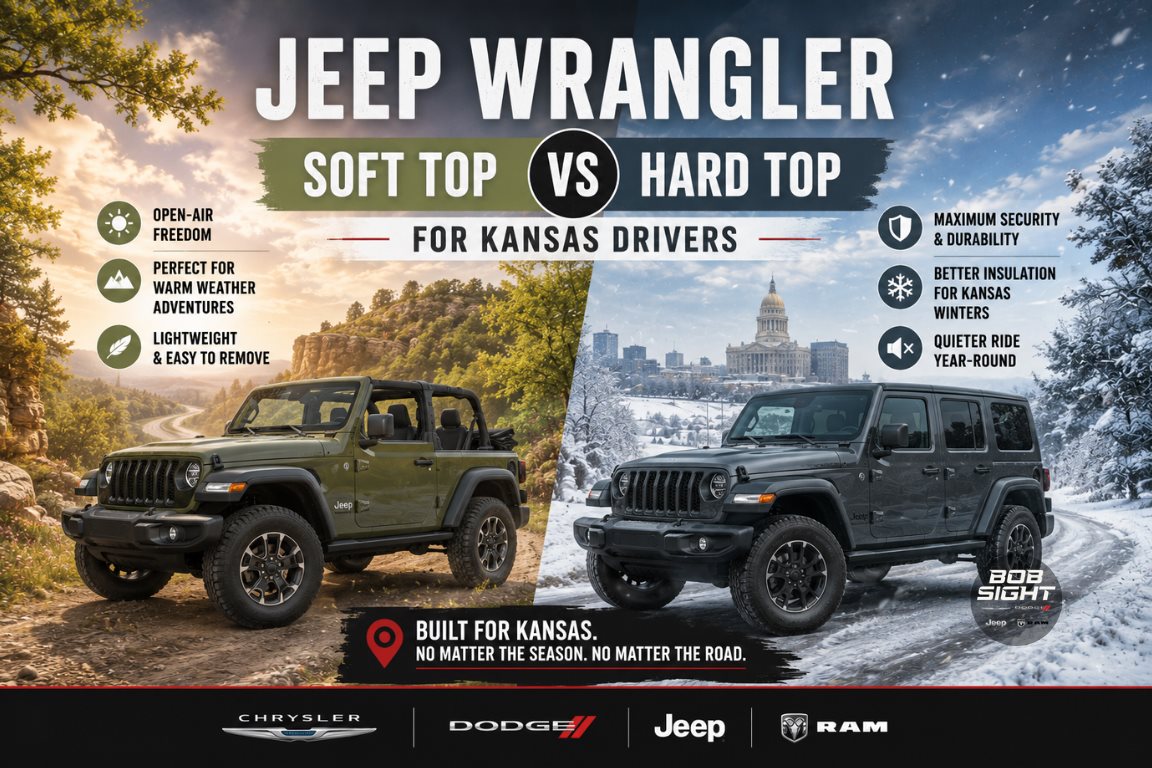
Jeep Wrangler Soft Top vs Hard Top for Kansas Drivers
View New Jeep Wrangler Inventory in Lawrence, KS
In This Guide You'll Learn:
- Why seasonal Midwestern weather dynamics require careful thought when selecting a Wrangler roof configuration.
- How advanced hard top composite architectures optimize cabin climate control during freezing winter blizzards.
- The specific convenience, storage mechanisms, and mechanical differences engineered into modern premium soft tops.
- Step-by-step instructions for safely removing, packing, and storing a rigid multi-piece factory hard top assembly.
- Plain-language explanations of essential manufacturer options like Freedom Panels, Sunrider designs, and acoustic headliners.
- Why working with a specialized regional dealership guarantees an ideal configuration tailored to your lifestyle.
Jeep Wrangler Soft Top vs Hard Top: Navigating the Varied Kansas Climate
Choosing between a soft top and a hard top for your Jeep Wrangler involves balancing the desire for instant open-air freedom against the practical necessity of all-weather insulation and cabin protection. The variable climate patterns across Northeast Kansas present distinct driving challenges, fluctuating rapidly between humid summer afternoons and freezing winter blizzards. Whether you are battling strong crosswinds along the exposed lanes of the K-10 highway corridor or navigating the tree-lined avenues near the University of Kansas campus, your choice of roof architecture directly dictates your daily commuting comfort and long-term satisfaction.
At Bob Sight CDJR, our dedicated sport utility vehicle experts routinely work with off-road enthusiasts and daily commuters from all over Lawrence, Topeka, and the surrounding Kansas City Metro communities. We understand that local vehicle ownership requires versatility, as a single automotive asset must adapt seamlessly to changing road conditions across Douglas County. The solid structure of a composite roof delivers a highly insulated, quiet driving experience that easily withstands heavy snowfall, while a premium fabric top allows you to drop the roof completely at a moment's notice near Clinton State Park.
Furthermore, long-term ownership involves evaluating how each configuration holds up against intense Midwestern environmental factors. Severe spring thunderstorms frequently bring heavy downpours, high winds, and hail hazards that place intense pressure on a vehicle's upper sealing structures. Conversely, the high heat of July demands an efficient climate control footprint to keep passengers comfortable during stop-and-go traffic transitions around Iowa Street. Reviewing the exact mechanical traits of both options allows you to make an informed investment that perfectly matches your daily driving lifestyle and year-round regional travel needs.
Advanced Hard Top Engineering: The Ultimate All-Season Structural Shield
The modern factory hard top configuration is engineered utilizing high-density molded plastic or fiberglass composite materials to provide superior cabin insulation, maximum structural durability, and enhanced security. This rigid design acts as an unyielding environmental barrier, making it the definitive choice for drivers who use their vehicle as a dedicated year-round daily commuter. Understanding the precise engineering attributes, acoustic behaviors, and thermal retention metrics of this composite platform helps prospective buyers maximize their vehicle's interior climate comfort.
For drivers facing severe winter driving conditions, a hard top excels by retaining cabin heat significantly better than thin fabric alternatives. The solid fiberglass walls prevent cold air intrusion during high-speed highway travel, allowing your heating system to maintain a stable, warm temperature with minimal effort. To enhance this capability further, owners can equip factory-recommended Mopar Removable Hardtop Headliners or specialized RedRock Hard Top Insulation Kits, which incorporate heavy-duty pleated nylon and foam backing to optimize thermal regulation and decrease HVAC system energy demands.
Additionally, the solid physical properties of a hard top provide an incredible reduction in cabin noise, creating a much calmer atmosphere during long-distance road trips. Wind buffeting and road surface vibrations are suppressed, allowing you to enjoy crystal-clear audio performance from your infotainment setup or hold natural conversations without shouting over high-velocity winds near the South Lawrence Trafficway. Furthermore, a rigid fiberglass structure delivers superior defense against potential vehicle break-ins, providing unmatched security when storing valuable gear or personal items inside the cargo hold.
| Roof Configuration | Primary Materials | Acoustic & Noise Control | Seasonal Climate Strengths |
|---|---|---|---|
| Factory Hard Top | Fiberglass Composite & Molded Plastic | Excellent Road and Wind Noise Suppression | Freezing Winters, Deep Snow Accumulation, High Heat |
| Premium Soft Top | 4-Ply Sailcloth Composite or Twill Fabric | Moderate Ambient and Highway Buffeting Noise | Mild Spring, Pleasant Summer Open-Air Driving |
Premium Soft Top Versatility: Embracing Pure Open-Air Freedom
The classic soft top setup embodies the foundational open-air heritage of the brand, offering unmatched flexibility, quick manual operation, and simple tool-free transformations. Modern soft tops have evolved dramatically from past generations, replacing old zipper configurations with clean, track-guided retention channels and premium multi-layer fabrics. This lightweight approach is perfectly tailored for adventurous drivers who want to react spontaneously to beautiful weather conditions across our shared regional landscapes.
Constructed utilizing rugged materials like heavy-duty 4-ply sailcloth composites or premium thick twill fabric, a modern soft top provides a surprisingly tough exterior shield that handles off-road trail debris well. Instead of planning an entire afternoon around complex mechanical disassembly, soft top owners can simply disengage the header latches and fold the roof back manually in minutes. This rapid adaptability allows you to welcome the sunshine instantly while traveling down Massachusetts Street, or pull the roof back up quickly if an unexpected spring shower develops.
Moreover, a soft top completely eliminates the storage hassles traditionally associated with removing a large, rigid composite roof structure from your vehicle. Because the entire fabric assembly folds down directly onto the rear frame architecture, it remains with the vehicle continuously, preserving valuable square footage inside your home garage or driveway storage shed. For individuals seeking customized shading options, these setups can be configured with specialized aftermarket additions like mesh sunshades or minimalist bikini tops to block intense direct UV rays while maintaining a rugged, open feel.
Step-by-Step Instructions for Safely Removing and Storing a Hard Top
Executing a deliberate, multi-step mechanical removal process is the absolute single best way to prevent structural warping, seal damage, and costly cosmetic scratching on a rigid factory hard top. Because these composite roofs are bulky, heavy, and physically unyielding, attempting to handle them without proper technical preparation can lead to unexpected personal strain or component misalignment. Following a highly structured handling protocol guarantees that your vehicle's weather stripping remains fully intact, ensuring a leak-free reinstallation when colder seasons arrive.
Before attempting to disassemble your vehicle's rigid roof structure at home, our factory-certified technicians suggest executing this step-by-step removal and storage sequence:
- Remove the Front Freedom Panels: Unlatch the central header clamps located above the rearview mirror, turn the rear L-shaped locking dials counterclockwise, and lift both lightweight panels away safely to store them in a protective fabric carry bag.
- Disconnect the Rear Electrical and Washer Lines: Locate the integrated wiring harness and fluid plumbing block inside the rear driver's side cargo corner, slide the red locking tab out, and disconnect both lines cleanly to prevent tearing the lines.
- Extract the Torx Mounting Fasteners: Utilize the specialized factory tool kit to remove the primary structural bolts securing the hard top to the lower body tub rails, placing all fasteners into the designated dashboard storage tray.
- Lift the Main Composite Assembly: Enlist the assistance of a second person or position a dedicated garage hoist system underneath the rear structure, lifting the top straight up to clear the alignment pins cleanly without dragging across the paint.
- Secure the Top in a Proper Storage Environment: Place the removed hard top vertically onto a specialized padded rolling cart system or cushion it on heavy foam blocks inside a dry garage space, shielding it completely from direct moisture and physical impacts.
Completing this simple mechanical checklist protects your high-value component investment from accidental drops or permanent structural distortion caused by improper storage angles. A hard top stored correctly on its designated rear edge preserves the integrity of its critical rubber perimeter seals, preventing sudden water leaks from developing down the road. Taking these extra moments to execute the process carefully ensures that your seasonal vehicle transitions remain efficient, safe, and completely stress-free.
Defining Wrangler Top Concepts: Plain-Language Technical Terms
Familiarizing yourself with unique manufacturing terms like Freedom Panels, sailcloth density, and wind buffeting helps you communicate with absolute clarity when shopping for vehicle upgrades. When reviewing vehicle build sheets or speaking with a professional automotive consultant, understanding this specialized language simplifies your research journey. Clear knowledge of these mechanical principles guarantees you select a top configuration that easily matches your year-round comfort expectations.
One of the most essential concepts to understand when analyzing hard top capability is the standard Freedom Panel configuration, which divides the front section of the roof into two independent, highly manageable pieces. These lightweight panels give drivers a quick hybrid option, allowing them to enjoy immediate open-air driving over the front seats without requiring the removal of the massive rear composite structure. This convenient setup bridges the gap perfectly, delivering quick open-air access during a lunch break commute near 23rd Street while keeping the rear cargo area completely sealed.
Additionally, defining the concept of "wind buffeting" is vital for understanding soft top daily drivability, as this term refers to the rapid air pressure fluctuations and fabric vibrations created at high highway speeds. High-quality 4-ply composite soft tops minimize this effect by utilizing specialized internal dampening layers and high-tension frame links that keep the fabric tightly stretched across the roll bars. Recognizing these material grade differences prevents you from buying a thin, low-cost top that vibrates excessively during regular travel along open regional thoroughfares.
The Maintenance Playbook: Protecting Your Sealing Elements Year-Round
Adhering to a strict, preventative cleaning and lubrication routine is absolutely vital to maintaining the absolute weatherproofing integrity and long-term value of your vehicle's roof setup. Because shifting seasonal weather extremes place continuous mechanical stress on rubber weather stripping, vinyl windows, and mechanical latches, routine care prevents premature leaks and structural drying. Partnering with a factory-certified service center ensures your seals receive appropriate treatment utilizing authentic manufacturer protectants.
Standard service parameters dictate that all rubber seal paths and contact joints should be thoroughly cleaned and treated with specialized Mopar silicone lubricant every six months, ideally before winter freezes and summer heat waves arrive. For drivers who frequently encounter dusty rural routes or heavy mud out past Clinton State Park, keeping these channels clear of debris prevents abrasive friction from tearing the weather stripping. Clean, well-lubricated seals ensure a tight, impenetrable bond that keeps rain and freezing air completely outside the cabin.
For soft top owners, maintaining the flexible vinyl windows requires a deliberate approach, as using standard glass cleaners containing ammonia can cause the clear material to yellow and crack over time. Utilizing mild automotive soaps and specialized microfiber cloths prevents fine surface scratching, keeping your rearward visibility perfect during busy lane changes near local highway exits. Additionally, applying seasonal UV-blocking fabric protectants to the sailcloth structure prevents premature color fading caused by intense summer sun exposure, extending the operational life of your roof assembly.
Shopping Paths Compared: The Dual-Top Package vs. Single-Top Commitments
Comparing the long-term flexibility of the manufacturer's Dual-Top Package against choosing a single permanent top configuration reveals significant value and ownership advantages. While selecting a single roof style keeps your initial purchase investment lower, committing to a multi-top setup grants you the complete, uncompromised expression of year-round vehicle utility. Analyzing your seasonal storage availability and driving priorities helps clarify which acquisition path provides the most rewarding ownership journey.
Opting for a single hard top setup is highly popular for drivers who prioritize highway comfort, minimal maintenance, and maximum security above all else. However, if you decide later in your ownership cycle that you want to enjoy the open-air soft top lifestyle, purchasing all required factory frame rails, mounting brackets, and fabric structures individually can be quite costly. Conversely, buying a soft top alone offers excellent initial affordability but forces you to endure increased cabin noise and reduced thermal efficiency throughout long, freezing winter storm cycles.
To eliminate this compromise entirely, the Dual-Top Package equips your vehicle with both a factory composite hard top and a premium matching soft top straight from the assembly floor. This comprehensive setup allows local owners to execute a highly strategic seasonal playbook: running the well-insulated hard top all winter to conquer snow and ice, then swapping to the flexible soft top for total summer freedom. Having both options on hand significantly enhances your vehicle's long-term resale equity, as secondary market shoppers heavily favor highly versatile, multi-roof enthusiast packages.
Interior Cabin Refinement: Staying Connected While Open to the World
The interior architecture of the modern Jeep Wrangler is meticulously engineered to provide advanced digital connectivity and premium comfort systems, regardless of the roof configuration installed above the seats. While the rugged exterior components actively conquer challenging elements on the road surface, the cockpit serves as a highly connectable mobile hub built to withstand the realities of open-air adventure. This focus on interior durability ensures that your digital systems perform flawlessly, even when traveling with the top completely removed.
At the center of the cabin technology experience is the highly responsive Uconnect infotainment system, featuring vibrant high-definition touchscreens that remain easily visible even under direct sunlight conditions. Full integration for Apple CarPlay and Android Auto provides simple, intuitive access to real-time weather alerts and navigation maps, letting you trace your routes toward Rock Chalk Park effortlessly. Available premium sound systems engineered by audio specialists like Alpine incorporate active electronic equalization matrices that automatically adjust sound frequencies to compensate for increased wind noise when driving top-down.
Beyond digital integration, the physical cabin construction utilizes heavy-duty materials explicitly engineered for easy cleanup following muddy trail adventures or sudden exposure to rain. Available weather-resistant seating surfaces feature deep contour configurations that keep you securely positioned during technical off-road maneuvers, while built-in heating elements keep you warm during cold morning drives down 23rd Street. Integrated floor drain plugs allow you to wash out the interior footwells directly with a hose, demonstrating an uncompromised commitment to authentic, rugged functionality.
Quick Facts: Roof Specification and Comparison Reference
- Material Contrast: Hard tops utilize durable fiberglass composites for maximum security, while soft tops rely on highly flexible 4-ply sailcloth or premium twill fabrics.
- Insulation Supremacy: Hard tops deliver superior thermal retention and road noise dampening, which can be enhanced further with specialized acoustic headliner panels.
- Open-Air Agility: Soft tops feature a lightweight, fold-down frame design that allows for quick manual operation without requiring external garage storage space.
- Security Integration: Rigid hard top configurations feature solid locking mechanisms and durable glass windows that act as an excellent theft deterrent.
- Hybrid Flexibility: The available Sunrider design for hard tops introduces a convenient soft fabric front section, offering instant open-air access over the front seats.
These key engineering attributes illustrate why both top choices continue to maintain a passionate following among driving enthusiasts across Northeast Kansas. By providing distinct operational strengths that cater to unique commuting priorities, each setup delivers an authentic expression of the iconic off-road lifestyle. Reviewing these factual parameters helps ensure you identify the ideal setup built to protect your family across every changing season.
Ownership Planning: Protecting Your Asset Value and Garage Space Parameters
Strategic long-term ownership planning involves evaluating your available physical storage space, proper seasonal tool configurations, and routine maintenance setups before altering your vehicle's roof. Because high-quality vehicle tops represent a substantial financial asset in the secondary automotive market, maintaining your equipment in immaculate physical order protects your ongoing equity. Taking a proactive approach to roof preservation shields your capital investment from natural wear and tear associated with Midwestern weather changes.
Living in the Lawrence region means your vehicle components will naturally face daily exposure to intense climate shifts, shifting from corrosive road salt treatments to high summer UV rays. Prioritizing regular structural inspections ensures that minor seal cracks or fabric wear spots are caught and resolved before they can compromise your interior cabin space. Utilizing specialized protective storage bags for your Freedom Panels and hanging hard tops securely on dedicated wall racks keeps these large components safe from garage floor clutter.
Ultimately, the single most powerful tool for securing your vehicle's long-term trade-in value is maintaining a continuous folder of factory-authorized service and inspection records. Showing that your vehicle consistently received professional multi-point inspections, authentic manufacturer protectants, and timely seal maintenance proves to future buyers that the asset was managed to an exceptional standard. By partnering with our experienced factory-trained team, you guarantee your sport utility vehicle remains fully optimized to conquer any seasonal challenge for miles to come.
Frequently Asked Questions
Is it difficult for one person to remove a Jeep Wrangler hard top alone at home?
Yes, removing a main factory hard top structure completely alone is exceptionally difficult and highly discouraged due to its awkward weight distribution, bulkiness, and rigid physical frame geometry. While the front two Freedom Panels are explicitly engineered to be incredibly lightweight and easily removed by a single person in under two minutes, the rear main composite canopy section weighs roughly 120 to 140 pounds. Attempting to lift this large component without a second person can easily scratch your vehicle's paint or strain your back.
To safely manage a solo hard top removal, owners must invest in a high-quality aftermarket garage hoist or pulley system mounted securely to their ceiling joists. These specialized lifting systems allow you to attach padded straps to the top's interior structure, mechanically lifting the composite roof straight off the body tub rails without manual lifting. Utilizing a hoist system also creates a safe, suspended storage solution that keeps the top off the ground and completely clear of garage floor traffic.
Without a dedicated mechanical hoist, attempting a solo removal routinely results in expensive damage to the fragile fiberglass rear corners and critical sealing surfaces. Misaligning the top while lifting can place intense pressure on the rear glass hinge pins, potentially fracturing the window glass or damaging the integrated electrical connections. Enlisting a friend or visiting our authorized dealership center for professional guidance guarantees your top removal process remains completely safe and efficient.
How does a premium soft top perform during a freezing Kansas winter storm?
A modern premium soft top performs surprisingly well during a freezing winter storm when constructed from heavy-duty 4-ply composite or thick twill materials, though it requires more time to warm up than a hard top. Modern fabric manufacturing techniques incorporate specialized internal insulation barriers and high-density weaves that deliver highly dependable wind resistance and water sealing. The heavy-duty vehicle heating system possesses more than enough operational output to keep the cabin comfortable once it reaches running temperature.
However, owners must exercise clear caution when managing heavy snow and ice accumulation on a fabric roof structure, as excessive weight can place undue strain on the internal metal support frames. It is absolutely critical to clear thick snow packs away carefully using a soft brush, completely avoiding sharp plastic ice scrapers that can instantly puncture the cold-stiffened vinyl windows. Additionally, the fabric and plastic windows become significantly less flexible in sub-freezing temperatures, meaning you should never attempt to fold the top down until it has warmed up inside a heated space.
Furthermore, because a soft top lacks the thick sound-deadening properties of a composite structure, owners will experience increased highway road noise and ambient drafts during intense winter gales along open transit pathways. If you plan to drive your vehicle primarily as a winter highway commuter across long regional distances, a hard top remains the superior choice for absolute comfort. For seasonal drivers who accept these minor trade-offs, a premium soft top remains a highly capable all-season option built to handle typical Midwestern winters safely.
Can I take my soft top Jeep Wrangler through a standard automatic car wash?
No, you should never take a soft top vehicle through a traditional automated car wash utilizing heavy spinning brushes, as the aggressive physical scrubbing action can easily scratch the vinyl windows and tear the fabric. The high-pressure water jets and harsh industrial cleaning chemicals found in typical automatic systems can force moisture past the flexible fabric seals, leading to unexpected cabin leaks. The intense mechanical pressure exerted by large spinning brushes can also stretch or warp the internal metal frame structure over time.
The absolute best way to maintain your fabric roof's cleanliness and prolong its operational lifespan is utilizing careful hand-washing methods or visiting a touchless automatic wash bay. Hand washing allows you to apply mild, non-abrasive automotive soaps gently using soft microfiber wash mitts, ensuring dirt particles are lifted without scratching the clear plastic rear view inserts. Taking the time to wash the top manually gives you an excellent opportunity to inspect the fabric seams and track guides for signs of wear.
Following a thorough wash, applying specialized manufacturer-approved fabric conditioners and protectants shields the material from aggressive environmental contaminants and solar degradation. Ensuring the top is completely dry before folding it down prevents mold and mildew from developing inside the fabric layers. Adhering to these simple preventative hand-washing habits safeguards your high-value soft top assembly, keeping it looking factory-new and performing flawlessly across thousands of miles.
Where can I purchase authentic Mopar hard top hoist systems and get professional roof adjustments near me?
Authentic Mopar hard top hoist systems, factory replacement parts, and professional technical adjustments are available at the Bob Sight CDJR service center, located at 2300 W 29th Terrace in Lawrence, Kansas. Our advanced repair center is fully staffed by factory-trained technicians who hold specialized structural certifications across all advanced 4x4 platforms. Utilizing an authorized dealership ensures your complex roof alignments and sealing modifications are executed strictly utilizing original equipment components and proprietary adjustment tools.
Our dedicated parts department maintains a comprehensive inventory of authentic freedom panel storage bags, replacement Torx tool kits, factory weather stripping arrays, and premium silicone seal lubricants engineered explicitly for your vehicle's VIN. We execute precise digital electronic diagnostics and manual smoke pressure tests to pinpoint the exact location of stubborn cabin drafts or water leaks, resolving seal gaps with absolute mechanical precision. This level of technical diagnostic accuracy completely eliminates the safety and structural uncertainties associated with visiting generic, independent repair shops.
Whether you require a comprehensive seasonal roof swap before winter arrives or need to order an advanced hard top insulation kit to maximize your highway cabin quietness, our service coordinators make the entire process effortless. You can conveniently schedule your next service appointment online or speak directly with our knowledgeable parts department to customize your vehicle's configuration. Trusting your specialized technical maintenance to our factory-trained professionals guarantees your vehicle remains completely secure, safe, and ready for any driving environment ahead.
Choose Local: Why Bob Sight CDJR is Your Premium 4x4 Configuration Authority
Choosing to partner with a trusted local automotive destination like Bob Sight CDJR guarantees you receive unmatched regional product expertise, complete transactional transparency, and premium long-term service support. We recognize that configuring your ultimate sport utility vehicle involves making crucial lifestyle decisions centered around daily utility and seasonal comfort, which is why we maintain a completely transparent, education-first shopping environment. We take great pride in serving our local neighborhoods as a dependable automotive resource you can count on year after year.
When you explore the hand-selected inventory at our Lawrence dealership showroom, you gain direct access to new and pre-owned vehicles that have been rigorously inspected and fully prepared to handle Midwestern driving challenges safely. Our experienced vehicle consultants possess a deep understanding of local road conditions and roof configurations, allowing us to help you identify the perfect model for your daily driving routine. We provide honest, straightforward trade-in valuations and highly competitive financing options under one roof, making your upgrade experience simple and stress-free.
Our unwavering dedication to your vehicle's productivity and reliability continues long after you sign the delivery documents and drive home to your neighborhood. Our state-of-the-art Mopar service center stands completely ready to help you execute your preventative maintenance playbook with absolute precision, utilizing only genuine original equipment components to sustain factory safety ratings. Whether you require a quick express lane fluid check before a weekend camping trip or a comprehensive sensor calibration after a minor scrape, our team is fully committed to your peace of mind. Visit us today on 29th Terrace, right off Iowa Street, and experience the distinct advantage of working with a true local automotive partner.
Helpful Links
- New Jeep Wrangler Inventory
- Schedule Roof Service Online
- Express Lane Maintenance Services
- Value Your Current Trade In
- Service and Parts Specials
PROUD TO BE PART OF THE BOB SIGHT AUTO GROUP
Bob Sight CDJR is incredibly proud to be a foundational member of the Bob Sight Auto Group, an automotive family that has proudly served drivers across the heart of the Midwest for over 100 years. Built on an enduring legacy of honesty, transparency, and uncompromised customer care, our group continues to set the benchmark for dealership excellence in Kansas and Missouri. No matter which of our convenient regional locations you choose to visit, you will always experience the exact same tradition of trust and dedicated service that has defined our family name for generations.