Jeep Grand Cherokee Lawrence KS Towing Capabilities Explained for Kansas City Metro Drivers
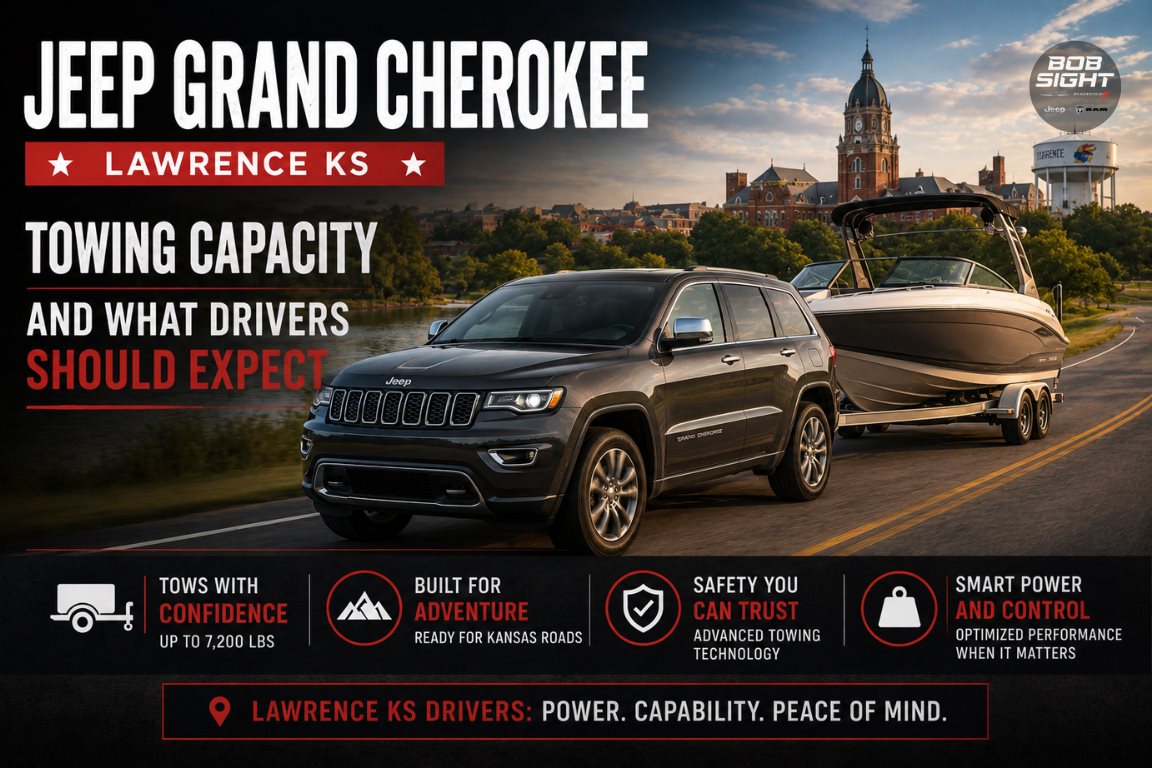
If you are considering a Jeep Grand Cherokee in Lawrence, KS for towing, understanding its real-world capability is essential for choosing the right SUV for your daily driving, weekend hauling, family travel, and long-term ownership needs. Drivers across Lawrence, Topeka, Baldwin City, Eudora, Douglas County, and the greater Kansas City Metro often need an SUV that can do more than handle the commute. Whether you are heading west on I-70 with a utility trailer, taking a boat toward Clinton Lake, bringing home project supplies from around town, or carrying gear through rural roads outside Lawrence, towing confidence matters. The Jeep Grand Cherokee has earned a strong reputation for combining comfort, technology, available 4x4 capability, and useful towing strength in one versatile SUV.
For Kansas drivers, towing is not only about the number listed on a spec sheet. It is about how the SUV feels when merging onto K-10, how stable it remains in crosswinds, how confidently it brakes with extra weight behind it, and how well it manages changing road surfaces around Lawrence and surrounding communities. A properly equipped Grand Cherokee can support a wide range of real-world towing needs, but the right configuration depends on the engine, drivetrain, towing equipment, trailer weight, cargo load, and how often you plan to tow. Understanding these details before you buy helps you avoid choosing too little capability or paying for more than you realistically need.
At Bob Sight CDJR in Lawrence, Kansas, drivers can compare Jeep Grand Cherokee models with everyday usability and towing confidence in mind. Some shoppers want a refined SUV that can occasionally tow a small trailer for weekend projects. Others want a Grand Cherokee that can support regular recreation, outdoor travel, or heavier equipment needs. Because these ownership goals are different, it is important to look beyond general towing claims and understand how Grand Cherokee capability fits your actual lifestyle.
This guide is built for drivers searching for Jeep Grand Cherokee Lawrence KS, Jeep Grand Cherokee towing capacity, Jeep Grand Cherokee near me, Jeep SUV for towing Kansas, or a capable SUV near Topeka and the Kansas City Metro. You will learn how towing capacity works, why engine and equipment choices matter, which towing features support control and safety, how Kansas weather and roads affect towing, and how to plan for long-term ownership if towing will be part of your routine.
Browse Jeep Grand Cherokee Inventory at Bob Sight CDJR
In this guide you’ll learn:
- What Jeep Grand Cherokee towing capacity means for Kansas drivers
- How engine options and equipment affect towing performance
- What towing features help improve safety, stability, and control
- How Lawrence, Topeka, Baldwin City, Eudora, and Kansas City Metro driving conditions impact towing
- How to prepare your Grand Cherokee before towing
- How the Grand Cherokee compares with other SUVs for towing and daily driving
- What to consider for long-term towing ownership in Kansas
What Is the Jeep Grand Cherokee Towing Capacity?
The Jeep Grand Cherokee towing capacity depends on the engine, drivetrain, trim, equipment, and towing package, giving Kansas drivers several ways to match capability to their real-world needs. Some Grand Cherokee configurations are designed for lighter towing, while properly equipped models can support more demanding recreational and utility loads. This flexibility is one of the reasons the Grand Cherokee appeals to drivers who want one SUV for commuting, family use, road trips, and weekend hauling. In Lawrence, that versatility can be useful for everything from daily driving on Iowa Street to towing gear toward Clinton Lake or hauling project materials across Douglas County.
Towing capacity is the maximum weight a vehicle is rated to tow when properly equipped, but that number should always be understood in context. Trailer weight, passenger weight, cargo weight, tongue weight, hitch equipment, and road conditions all affect how towing feels in the real world. A Grand Cherokee may be capable of towing a certain maximum amount on paper, but drivers should still leave a margin of comfort and avoid pushing limits unnecessarily. This is especially important when towing in heat, wind, traffic, or hilly terrain.
For drivers traveling between Lawrence and Topeka or heading toward the Kansas City Metro, towing capacity is about more than strength alone. It is about stability, braking confidence, predictable steering, and the ability to maintain control during highway travel. A properly equipped Grand Cherokee can provide a reassuring balance of capability and everyday refinement. That balance makes it appealing for shoppers who do not want a full-size truck but still need useful towing ability.
Before choosing a Grand Cherokee, shoppers should identify what they plan to tow most often. A small utility trailer, lightweight camper, personal watercraft, boat, or equipment trailer can each create different demands. Drivers should also think about how frequently they will tow and whether trips will be mostly local or regional. Matching the SUV to the actual trailer and driving conditions helps ensure safer, more satisfying ownership.
How Engine Options Impact Jeep Grand Cherokee Towing Performance
Engine choice plays a major role in how confidently a Jeep Grand Cherokee tows because power delivery, torque, cooling performance, drivetrain pairing, and overall vehicle configuration all affect real-world capability. A more powerful engine can provide stronger acceleration with a trailer attached, while the right drivetrain and towing equipment help manage traction, control, and long-distance stability. For Kansas drivers, the right engine decision should be based on how the SUV will actually be used. Occasional light towing creates different needs than frequent trailer use or long highway travel.
Drivers in Lawrence should think carefully about the types of roads they travel most often. Towing across town at lower speeds feels different from merging onto I-70 or maintaining steady speed on K-10 with extra weight behind the vehicle. Highway towing requires confidence when accelerating, passing, climbing grades, and managing wind. The engine and drivetrain should feel capable without making the SUV feel strained during normal driving conditions.
Torque is especially important for towing because it helps move weight from a stop and supports confident acceleration under load. Horsepower also matters, particularly for highway passing and maintaining speed. However, towing performance is not only about engine output. Transmission behavior, axle ratio, cooling capacity, suspension tuning, braking systems, and trailer equipment all work together to determine how controlled the towing experience feels.
Choosing the right engine can also support long-term reliability. If you plan to tow often, selecting a configuration designed for your expected load can reduce unnecessary strain and make driving feel more relaxed. If you only tow occasionally, a lighter-duty setup may be more than enough while still giving you the comfort and efficiency you want for everyday use. The goal is to choose a Grand Cherokee that matches your actual towing habits rather than guessing based on maximum numbers alone.
What Does Properly Equipped Mean for Towing?
When a Jeep Grand Cherokee towing rating says “properly equipped,” it means the SUV must have the correct factory or approved towing equipment, drivetrain configuration, hitch setup, wiring, and supporting systems required for that rating. This phrase is important because towing capacity is not automatically the same on every Grand Cherokee. Two SUVs may look similar from the outside but have different towing capabilities depending on equipment. Shoppers should always verify the specific vehicle’s rating before assuming it can tow a particular load.
Proper towing equipment may include a receiver hitch, wiring harness, cooling enhancements, trailer sway control capability, and other supporting components depending on the model and configuration. These features help the SUV manage the additional weight, electrical connection, braking coordination, and stability needs created by a trailer. Without the right equipment, a vehicle may not be rated for the towing capacity a shopper expects. This is one reason working with a knowledgeable dealership team is helpful.
Tongue weight is another important part of proper towing. Tongue weight refers to the downward force the trailer places on the hitch, and it must stay within safe limits. Too little tongue weight can cause trailer instability, while too much can affect steering, braking, suspension balance, and rear ride height. Drivers towing through Lawrence, Topeka, and surrounding Kansas communities should understand that towing safety depends on weight distribution as much as total trailer weight.
Shoppers should also consider what will be inside the SUV while towing. Passengers, cargo, tools, coolers, sports gear, luggage, and pets all add weight that can affect overall towing calculations. A trailer that seems manageable when empty may create a very different towing picture once it is loaded. Properly equipped means thinking through the full setup, not just the trailer itself.
Key Towing Features That Improve Control and Safety
The Jeep Grand Cherokee offers towing and stability features designed to help improve control, confidence, and safety while hauling in Kansas driving conditions. These systems are valuable for both experienced drivers and those towing for the first time. Towing changes how a vehicle accelerates, brakes, turns, and responds to wind, so supportive technology can make a meaningful difference. The best towing experience combines the right equipment with careful preparation and attentive driving.
Trailer sway control is one of the most important features for towing confidence. Trailer sway can happen when wind, speed, steering input, uneven pavement, or improper loading causes the trailer to move side to side. When this happens, the driver may feel the trailer tugging or shifting behind the SUV. Trailer sway control is designed to help reduce instability and support a more controlled towing experience.
Braking and traction systems also matter because towing increases stopping distance and changes weight distribution. Systems that support braking control, traction management, and vehicle stability can help drivers maintain confidence on wet roads, gravel surfaces, or uneven pavement. These systems are not a substitute for careful driving, but they provide extra support when conditions become less predictable. This can be particularly useful around Kansas construction zones, rural roads, and highway stretches with crosswinds.
Visibility and driver-assist features can also make towing easier. Helpful technology may support backing up, monitoring surroundings, maintaining lane awareness, or improving confidence in traffic. Drivers towing near busy areas of Lawrence, on K-10, or through the Kansas City Metro benefit from features that reduce stress and improve awareness. When paired with smart towing habits, these systems help make the Grand Cherokee feel more composed and capable.
How Kansas Driving Conditions Affect Towing
Kansas driving conditions can significantly affect towing performance because weather, wind, road quality, traffic patterns, and seasonal temperature changes all influence how a loaded SUV behaves. Drivers in Lawrence, Topeka, Baldwin City, Eudora, and the Kansas City Metro should think about towing as a real-world activity rather than a simple number on a specification sheet. A trailer that feels easy to manage on a calm morning may feel different during high winds, heavy rain, summer heat, or winter cold. Local conditions should always be part of your towing plan.
Wind is one of the biggest towing considerations in Kansas. Open highway stretches can expose trailers to crosswinds that affect stability, especially with taller campers, enclosed trailers, or lightweight loads. Drivers traveling along I-70 or K-10 should be prepared to reduce speed and leave additional following distance when wind picks up. Even with supportive technology, careful driving remains essential for towing confidence.
Temperature also matters. Hot Kansas summers can place additional stress on engines, transmissions, tires, and cooling systems, especially when towing heavier loads or traveling longer distances. Cold weather can affect tire pressure, traction, battery strength, and braking feel. Seasonal inspections help ensure the vehicle and trailer are ready before demanding trips. This is why maintenance becomes a major part of towing ownership.
Road quality should not be overlooked either. Potholes, construction zones, uneven pavement, rural roads, and gravel surfaces around Douglas County can affect trailer stability and vehicle control. Drivers should adjust speed and increase awareness when towing over rough surfaces. The more prepared you are for local road conditions, the safer and smoother your towing experience will feel.
Step by Step Guide to Preparing Your Grand Cherokee for Towing
Preparing your Jeep Grand Cherokee for towing involves checking the SUV, trailer, cargo, and route before you begin driving so you can reduce risk and improve confidence on Kansas roads. Many towing issues happen because small preparation steps are skipped. A few minutes of inspection can help prevent problems with lights, tire pressure, loose cargo, hitch connection, or load balance. This is important whether you are towing across Lawrence or heading out for a longer trip toward Topeka, Clinton Lake, or the Kansas City Metro.
- Confirm your vehicle’s towing capacity. Verify the exact rating for your Grand Cherokee configuration and equipment before attaching a trailer.
- Check the trailer weight. Make sure the loaded trailer weight stays within safe limits, not just the empty trailer weight.
- Inspect the hitch and connections. Confirm the hitch, ball mount, coupler, safety chains, and wiring are secure and properly connected.
- Verify tire pressure. Check both the Grand Cherokee tires and trailer tires before driving because pressure changes can affect handling.
- Test lights and signals. Confirm brake lights, turn signals, hazard lights, and running lights work correctly on the trailer.
- Balance and secure cargo. Load the trailer properly and secure all items so weight does not shift during travel.
- Plan your route. Consider highway speeds, construction, hills, traffic, weather, and stopping points before leaving.
- Allow extra stopping distance. Towing adds weight and requires more space to slow down safely.
This preparation process is essential for drivers traveling from Lawrence to surrounding areas. It helps reduce preventable risks and improves control on familiar and unfamiliar roads. Even short trips can become stressful if the trailer is not connected properly or the load is not balanced. Developing a repeatable towing checklist creates better habits and more consistent confidence.
Working with a dealership like Bob Sight CDJR can provide additional guidance for shoppers who want to confirm equipment, compare configurations, or understand towing-related features. The team can help drivers review available Grand Cherokee models and identify which setups align with their intended towing needs. This support can be valuable for first-time towers and experienced drivers alike. A properly matched SUV makes towing easier, safer, and more enjoyable.
Jeep Grand Cherokee vs Other SUVs for Towing
Compared to many midsize SUVs, the Jeep Grand Cherokee offers a strong balance of towing capability, comfort, available 4x4 confidence, and everyday usability. This balance is what makes it appealing for Kansas drivers who do not want to choose between a capable utility vehicle and a comfortable daily driver. Some SUVs prioritize passenger comfort but provide limited towing strength. Others offer stronger towing capability but feel less refined during daily commuting and family travel.
The Grand Cherokee stands out because it is designed to serve multiple roles well. It can feel comfortable during errands around Lawrence, composed during highway travel to Kansas City, and capable when towing recreational gear or small trailers. That range of use matters for families and individuals who need one vehicle to cover many needs. Instead of buying a dedicated truck for occasional towing, many shoppers prefer an SUV that can manage both weekday and weekend demands.
When comparing SUVs for towing, shoppers should consider more than maximum tow ratings. Comfort, visibility, drivetrain options, cabin space, cargo area, safety technology, maintenance needs, and ease of daily use all matter. A vehicle that tows well but feels cumbersome every day may not be the right fit. A vehicle that feels comfortable but lacks enough towing capacity may create limitations later.
For drivers in Lawrence, KS, the right SUV should fit the full ownership picture. That includes commuting, family travel, road trips, recreation, weather confidence, towing needs, and long-term comfort. The Grand Cherokee is often worth considering because it blends these priorities in a way many competing SUVs do not. This makes it a strong option for Kansas drivers who want capability without giving up refinement.
Common Trailer Types Kansas Grand Cherokee Drivers May Tow
Jeep Grand Cherokee drivers in Kansas may tow a wide range of trailers, including small utility trailers, lightweight campers, boat trailers, personal watercraft trailers, small equipment trailers, and cargo trailers. The right match depends on the Grand Cherokee configuration, trailer weight, cargo weight, and driver experience. Before towing any trailer, drivers should confirm both the vehicle rating and the loaded trailer weight. This helps prevent unsafe assumptions and supports better control.
Utility trailers are common for home improvement projects, landscaping materials, furniture, appliances, and weekend chores. These trailers may seem simple, but the loaded weight can increase quickly once supplies are added. Drivers around Lawrence and Douglas County should remember that mulch, tools, lumber, equipment, and household items can become heavy fast. A careful weight estimate is important before starting the trip.
Recreational towing is another common reason shoppers consider the Grand Cherokee. Drivers may want to tow a small camper, boat, personal watercraft, bikes, outdoor gear, or vacation equipment. Trips to Clinton Lake, state parks, or regional recreation destinations often involve a mix of highway driving, lower-speed roads, parking lots, ramps, and uneven surfaces. These conditions make stability, visibility, and preparation especially important.
Some drivers may also use a Grand Cherokee for light work-related towing. This can include small equipment trailers, enclosed cargo trailers, or tools needed for local jobs. In those cases, owners should pay attention to how often towing happens because frequent use can affect maintenance timing. Towing occasionally and towing every week create very different ownership needs.
Quick Facts About Grand Cherokee Towing
- Towing capacity varies by engine, drivetrain, trim, and equipment.
- Properly equipped Grand Cherokee models can support a wide range of recreational and utility towing needs.
- Trailer sway control helps improve stability when towing in wind or uneven road conditions.
- Engine choice affects acceleration, confidence, and long-distance towing performance.
- Kansas wind, heat, cold, traffic, and road quality can all impact towing feel.
- Trailer weight should be calculated when loaded, not just when empty.
- Tire pressure, brake lights, hitch security, and cargo balance should be checked before every towing trip.
- Regular maintenance is important for SUVs that tow frequently.
These quick facts highlight the most important towing considerations for Grand Cherokee shoppers and owners. Towing confidence depends on the right combination of vehicle capability, equipment, preparation, maintenance, and driving habits. Understanding these points helps Kansas drivers make better decisions before they purchase and before they tow. The more informed the driver, the more confident the towing experience becomes.
Ownership Planning for Towing in Kansas
Planning for towing ownership means thinking about how often you will tow, what you will tow, where you will drive, and how your Grand Cherokee should be maintained over time. Drivers in Lawrence, KS should consider both current and future needs before choosing a configuration. A shopper who only tows a small trailer once or twice a year may have different priorities than someone who frequently hauls a camper, boat, or work equipment. The best choice is the one that fits your real life, not just the most impressive number.
Long-term towing ownership also requires consistent maintenance. Towing places added demand on tires, brakes, suspension, engine cooling, transmission performance, and fluids. This does not mean towing is a problem, but it does mean owners should stay attentive to service intervals and inspections. A Grand Cherokee that tows regularly should be treated with a more proactive maintenance mindset.
Seasonal planning is especially important in Kansas. Before summer towing trips, drivers should pay attention to tire condition, cooling system performance, brake health, and fluid levels. Before winter travel, traction, tire pressure, battery strength, and braking confidence become more important. Preparing for seasonal changes helps prevent avoidable issues and supports a safer driving experience.
Ownership planning should also include realistic expectations about storage, accessories, and towing equipment. Drivers may need the right hitch accessories, trailer wiring, brake controller considerations, cargo management tools, or maintenance support. When these pieces are planned early, towing feels more organized and less stressful. A thoughtful approach helps the Grand Cherokee serve both daily driving and weekend capability needs more effectively.
Frequently Asked Questions About Jeep Grand Cherokee Towing
How much can a Jeep Grand Cherokee tow in Lawrence, KS?
The towing capacity of a Jeep Grand Cherokee depends on the specific model, engine, drivetrain, trim, and towing equipment. Some configurations are designed for lighter recreational loads, while properly equipped models can support more demanding towing needs. Drivers should always confirm the exact rating for the specific Grand Cherokee they are considering. This is important because two vehicles with similar names may not have the same towing capability.
Drivers in Lawrence often use their SUVs for a mix of commuting, family travel, weekend recreation, and occasional hauling. That makes towing capacity an important part of the buying decision. A vehicle that works well for daily driving should also provide enough confidence for the trailer or gear you plan to tow. Matching the Grand Cherokee to your real-world needs helps prevent stress later.
Consulting with Bob Sight CDJR can help clarify which models and configurations are best suited for your towing goals. The team can help you compare available Grand Cherokee options and review the equipment that affects towing capability. This helps ensure the SUV you choose aligns with your lifestyle. It also supports safer and more confident towing practices.
Is the Grand Cherokee good for towing in Kansas weather?
Yes, the Jeep Grand Cherokee can be a strong SUV for towing in Kansas weather when properly equipped and driven with appropriate care. Its available towing features, stability systems, and capable configurations help support control in a range of local conditions. However, Kansas weather can change quickly, so drivers should still prepare carefully. Wind, rain, heat, cold, and road surface changes can all affect towing feel.
Seasonal changes can influence towing performance in different ways. Hot weather can increase stress on cooling systems and tires, while cold weather can affect tire pressure, battery strength, traction, and braking feel. Drivers towing during stormy or windy conditions should reduce speed, increase following distance, and avoid sudden steering movements. Proper preparation and maintenance help the Grand Cherokee perform more confidently.
Drivers in Douglas County, Topeka, Baldwin City, Eudora, and the Kansas City Metro benefit from understanding how local weather affects towing. A trailer that feels stable on one trip may behave differently under heavy wind or rain. Checking conditions before departure and adjusting driving habits can make a meaningful difference. Towing safely is always a combination of the right vehicle, the right equipment, and the right driver decisions.
What features help with Jeep Grand Cherokee towing safety?
Features such as trailer sway control, stability control, traction support, advanced braking systems, available 4x4 capability, and driver-assist technologies can help improve confidence while towing. Trailer sway control is especially useful because trailers can move side to side when affected by wind, speed, uneven roads, or improper loading. Stability and traction systems can help support control when road conditions become less predictable. These features are helpful tools for both new and experienced towing drivers.
However, technology works best when combined with proper preparation. Drivers should verify hitch connections, safety chains, wiring, lights, tire pressure, trailer weight, and load balance before every towing trip. Cargo should be secured carefully so weight does not shift while driving. These basic steps can help prevent many common towing issues before they happen.
Using towing features correctly enhances the overall experience and provides added confidence on Kansas roads. Drivers should understand what their specific Grand Cherokee includes and how each feature supports towing. If a shopper is comparing models, asking about towing technology during the buying process can be helpful. A better understanding of the equipment leads to safer and more confident ownership.
What should I check before towing with a Jeep Grand Cherokee?
Before towing with a Jeep Grand Cherokee, drivers should confirm the vehicle’s towing capacity, loaded trailer weight, hitch connection, safety chains, wiring, trailer lights, tire pressure, brake function, and cargo balance. These checks are important even for short local trips. A small issue with lights, tires, or load distribution can create a stressful or unsafe driving experience. Building a repeatable checklist helps make towing preparation easier.
Drivers should also review weather and route conditions before leaving. Kansas wind, road construction, rain, heat, and traffic can all change how towing feels. If the trip includes I-70, K-10, rural roads, or busy metro traffic, extra planning can help reduce surprises. Leaving more space for braking and avoiding rushed driving are simple but important habits.
If you are unsure whether your Grand Cherokee is properly equipped, it is smart to ask a dealership team for guidance before towing. Bob Sight CDJR can help drivers review available models, towing equipment, and maintenance considerations. This support is useful for first-time towers and for drivers upgrading from a smaller SUV. Confidence starts before the trailer is attached.
Does towing affect Jeep Grand Cherokee maintenance needs?
Yes, towing can affect Jeep Grand Cherokee maintenance needs because hauling extra weight places more demand on the engine, transmission, brakes, tires, cooling system, suspension, and fluids. The more frequently you tow, the more important it becomes to stay proactive with service. Even if the SUV feels normal, components may be working harder than they would during everyday commuting. Regular inspections help catch wear before it becomes a larger issue.
Drivers who tow in Kansas should pay close attention to tire condition, brake feel, fluid levels, cooling performance, and any changes in shifting or steering. Summer heat and highway towing can increase stress on major systems, while winter conditions can affect traction and braking confidence. If the Grand Cherokee is used for towing boats, campers, utility trailers, or equipment, maintenance planning should reflect that use. A standard driving schedule may not always tell the full story.
Service visits are also a good time to discuss towing habits with the dealership team. Letting the service department know what you tow, how often you tow, and where you drive helps them evaluate the vehicle more effectively. A towing-focused maintenance plan supports long-term reliability and safer travel. It also helps protect the investment you have made in your SUV.
Why Local Jeep Shopping Matters in Lawrence KS
Shopping locally allows drivers to explore Jeep Grand Cherokee models in person, compare towing-related features, and receive guidance based on Kansas driving conditions. Online research is helpful, but it cannot replace sitting in the vehicle, reviewing equipment, asking detailed questions, and comparing configurations side by side. Drivers from Lawrence, Topeka, Baldwin City, Eudora, and the Kansas City Metro benefit from working with a dealership that understands the region. Local insight matters when towing is part of the buying decision.
At Bob Sight CDJR, shoppers can explore Grand Cherokee models with both daily comfort and towing capability in mind. This is useful because the right vehicle should support more than one part of your life. You may need an SUV for commuting, school pickup, road trips, weekend recreation, and occasional towing. A local dealership team can help you think through those needs instead of focusing only on one number or feature.
Shopping locally also supports long-term ownership. Drivers can return for maintenance, ask future towing questions, schedule service, explore accessories, and receive guidance as needs change. If your towing habits increase over time or your family’s travel plans evolve, having a local dealership relationship can make ownership easier. This support is especially useful for drivers who want confidence before and after the purchase.
For Kansas drivers, the Jeep Grand Cherokee offers a strong combination of comfort, capability, and versatility. Choosing the right configuration ensures that the SUV supports your lifestyle across daily routes and weekend plans. Whether you are towing around Lawrence, heading toward Clinton Lake, traveling to Topeka, or crossing the Kansas City Metro, the right Grand Cherokee can help make the journey feel more confident and capable.
Helpful Links
Proud to be part of the Bob Sight Auto Group
Bob Sight CDJR in Lawrence, Kansas proudly serves drivers from Lawrence, Topeka, Baldwin City, Eudora, Douglas County, and across the greater Kansas City Metro. Whether you are exploring Jeep Grand Cherokee towing capabilities, comparing SUV configurations, planning for long-term ownership, or scheduling service, our team is here to help. We are committed to providing helpful guidance that makes the shopping and ownership process easier to understand. Our goal is to support drivers with useful information, local expertise, and a dealership experience built around confidence.
As part of the Bob Sight Auto Group, Bob Sight CDJR is connected to a trusted family of local automotive resources serving Kansas and Missouri drivers. This network allows drivers to explore multiple brands, service options, and ownership support resources across the region. Whether your household includes a Jeep, Ram, Dodge, Chrysler, Honda, Ford, Kia, or a vehicle needing collision repair, the Bob Sight Auto Group is built to support your automotive needs. That local connection helps create a more convenient and reliable ownership experience for drivers across the Kansas City Metro.
```